



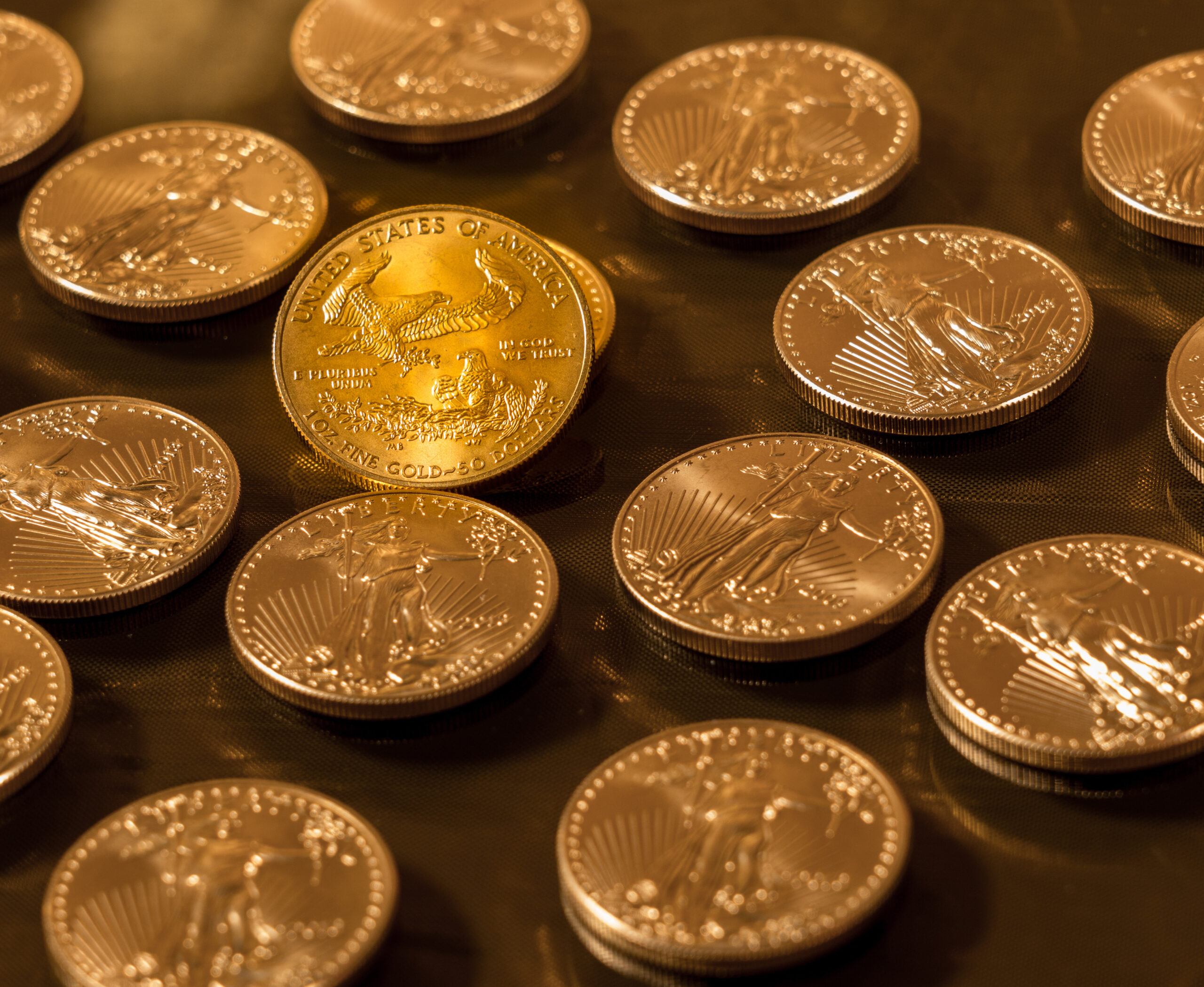


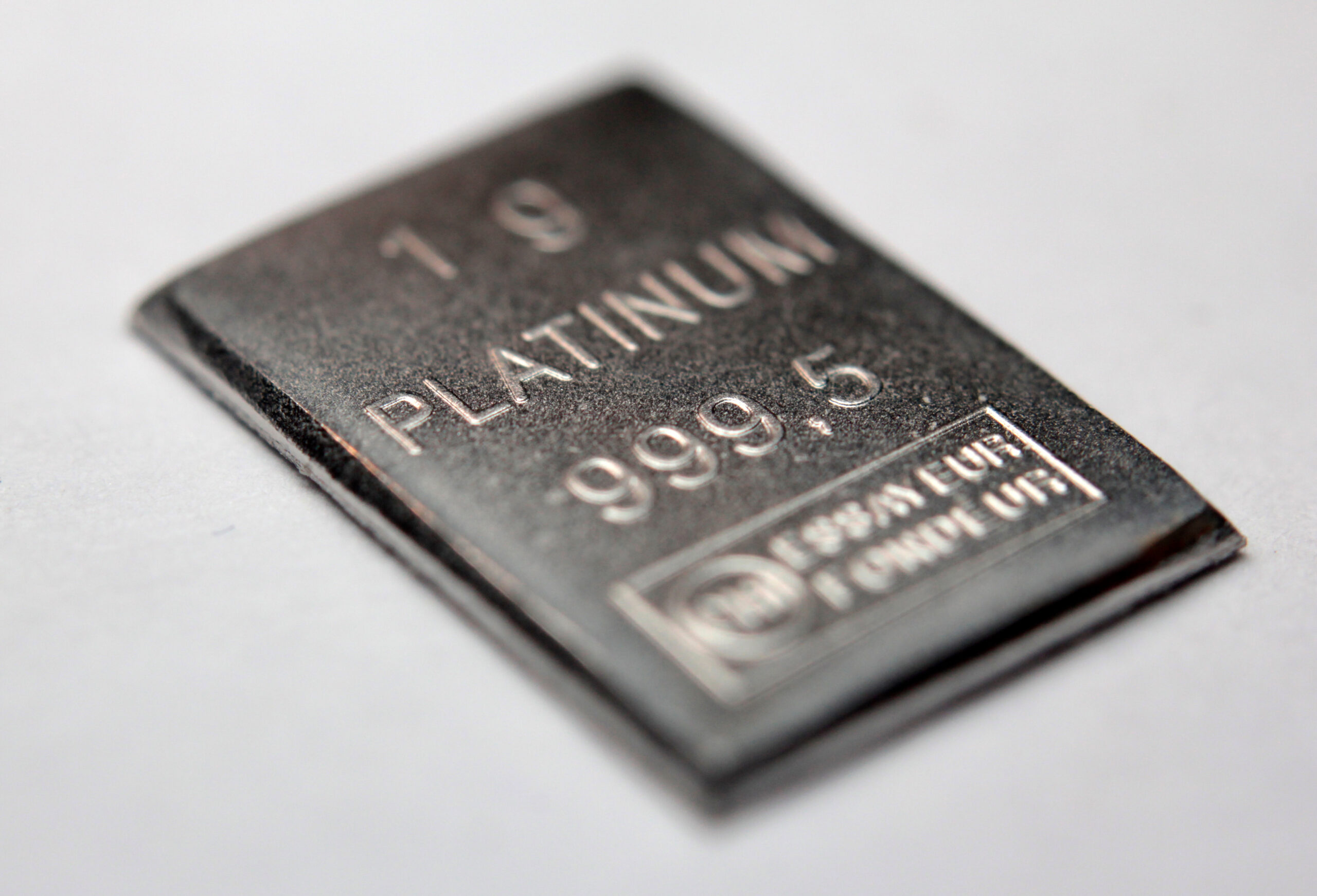












Few questions come up more often in conversations with precious metals investors than this one: “If things get bad enough, won’t the government just take my gold like Roosevelt did in 1933?”
It’s a fair question, and it deserves a serious answer rather than a dismissive one. The 1933 episode was real. Americans were ordered to turn over their gold coins, bullion and gold certificates to the Federal Reserve in exchange for paper dollars, under threat of a $10,000 fine, a staggering sum at the time, and up to 10 years in prison. After they turned it in, they watched the government revalue that same gold by roughly 69% within a year. Anyone who lived through it, or whose grandparents told the story at the dinner table, is entitled to a healthy skepticism about government promises.
But history rhymes; it does not repeat verbatim. When we examine why the 1933 order happened, including the specific monetary machinery that made it both necessary and useful to the government of that day, we see a very different environment from today. The mainstream analytical consensus, from the Federal Reserve’s own historians, from legal scholars, and from the financial press, has converged on the same conclusion we have reached independently: A rerun of Executive Order 6102 is a low-probability scenario facing gold owners today. The realistic risks are different in kind: regulatory and tax-related rather than confiscatory.
This Battle Bulletin walks through:
- The 1933 history and the specific monetary mechanics that made Executive Order 6102 possible
- The longer European tradition of sovereigns reaching for private gold when war, debt or fiscal stress demanded it
- The four structural reasons we are skeptical of confiscation fears today
- What mainstream commentators, legal scholars and market analysts have concluded
- Where investor attention is better spent: taxation, reporting, counterparty risk and ownership structure
Part I: What Actually Happened in 1933, and Why
To assess whether something can happen again, you first have to understand why it happened the first time. The popular retelling, “The government stole everyone’s gold,” is exactly what it felt like. But this misses the mechanics, and the mechanics are everything.
In April 1933, the United States was on a functioning gold standard. Paper dollars were, by law, redeemable in physical gold at a fixed rate of $20.67 per ounce, a rate that had been enshrined since the Gold Standard Act of 1900. The Federal Reserve was legally required to hold gold backing against the currency it issued. Gold was not merely an investment; it was the legal foundation of the money supply and the settlement medium written into countless private contracts through so-called gold clauses, which entitled creditors to demand payment in gold, thereby guaranteeing the paper. We are bankers and we would like that!
That architecture created a very specific vulnerability. In the depths of the Depression-era banking crisis, frightened depositors did the rational thing: They converted deposits to currency and currency to gold, draining metal from the Federal Reserve’s vaults faster than it could be replenished. The government faced a genuine technical insolvency in its monetary obligations. Obviously, it could not print gold, and it could not expand the money supply to fight the Depression without either acquiring more gold or breaking the link.
Roosevelt did both. Executive Order 6102, signed April 5, 1933, under authority derived from the Trading with the Enemy Act of 1917 (as amended by the Emergency Banking Act weeks earlier), required delivery of most privately held monetary gold to the Federal Reserve at the official $20.67 rate. Congress then passed the Gold Reserve Act of 1934, transferring monetary gold to the Treasury and resetting the official price at $35 per ounce. This was in effect a devaluation of the dollar and, for those who had surrendered gold a few months earlier, a 69% revaluation captured entirely by the government. A companion Joint Resolution voided gold clauses in private contracts, forcing creditors to accept paper payment. The Supreme Court upheld the framework, though only narrowly, over vigorous dissents.
Several details of the episode are worth noting because they cut against the popular mythology:
- It was compensated encashment, not seizure. Holders received full legal value at the then-official price. As commentators like GoldCore and veteran market analyst Alasdair Macleod have emphasized, the government did not technically violate property rights as they were then defined. It paid the lawful price. The injury came afterward, through devaluation. This distinction matters because an uncompensated seizure today would represent a categorically greater assault on property law with no supporting precedent.
- Enforcement was thin. Individual prosecutions of people retaining their gold were rare. The most famous case, against New York attorney Frederick Barber Campbell, actually failed on procedural grounds, forcing the administration to reissue the order under new authority. Compliance didn’t come from door-to-door searches; it came primarily from the practical reality that gold removed from legal commerce became difficult to use. (The persistent story that Roosevelt ordered safe-deposit boxes searched is, per the historical record, a hoax.)
- There were significant exemptions. Individuals could keep roughly $100 in gold (about five ounces at the time), and rare coins with recognized collector value were exempt entirely.
While we may remain offended by what occurred, the essential point is that the 1933 action was not an arbitrary wealth grab. It was a targeted intervention to resolve a specific structural problem. The gold-convertible currency was hemorrhaging reserves, and the legal gold cover requirement prevented the monetary expansion needed to combat the Depression. The government needed the gold because the gold was the money.
Part II: The Longer History, When Sovereigns Coveted Their Subjects’ Gold
Roosevelt, it should be said, was a latecomer to a very old game. For most of a millennium, European sovereigns treated their subjects’ gold as a contingent asset of the crown. In their view, it was available for the taking whenever war, debt or dynastic ambition outran tax receipts. Individuals who suspect that governments have historically helped themselves to private gold are not paranoid; they are well-read. The instructive question is not whether it happened, but how. The pattern of how sovereigns took gold, and from whom, tells us a great deal about where the risk actually sits today.
Consider a brief tour of the greatest hits:
Philip IV of France (r. 1285-1314) ran the full playbook in a single reign. Perpetually short of funds for his wars with England and Flanders, he expelled the Jews of France in 1306 and confiscated their property, collecting for the crown the debts owed to them. The following year, on Friday, October 13, 1307, he arrested the Knights Templar en masse and appropriated their assets.
The order had functioned as medieval Europe’s largest banking network, and its Paris temple held one of the great treasure vaults of the era. Between these episodes, he serially debased the French coinage so aggressively that contemporaries branded him a counterfeiter king, and Dante consigned him to literary infamy for it. Note the target selection: not gold dispersed among the peasantry but gold concentrated in visible, institutional custody.
The English crown was little better. Edward I expelled England’s Jewish population in 1290, with their property escheating to the crown. Edward III simply defaulted on the enormous loans extended to him by the great Florentine banking houses of Bardi and Peruzzi in the 1340s, a sovereign default that helped collapse both firms and, with them, much of the Italian financial system. Two centuries later, Henry VIII executed history’s most spectacular asset seizure short of conquest: First, there was the dissolution of the monasteries (1536-1541), which stripped religious houses of their land, gold plate and jeweled shrines. This was followed by the Great Debasement of 1544-1551, in which the silver content of English coinage was cut so severely that Henry earned the nickname Old Coppernose, the copper showing through the thin silver wash on his portrait coins.
The Spanish Habsburgs refined a subtler technique. When treasure fleets arrived at Seville carrying silver consigned to private merchants, the crown periodically sequestered those private shipments outright, compensating the owners with juros, long-term government bonds of doubtful value. Merchants were thus force-converted from owners of hard metal into involuntary creditors of a serial defaulter: Philip II suspended payments on his debts four times (1557, 1560, 1575, and 1596). If the mechanics sound familiar — surrender your metal and receive government paper — they should.
In 1640, Charles I of England provided perhaps the most instructive episode of all, considering what came after. Desperate for funds and at war with his own Parliament, Charles seized the private gold that London’s merchants and goldsmiths had deposited for safekeeping at the Royal Mint in the Tower, intercepting it as a forced “loan.” Under furious protest, he relented, releasing roughly two-thirds and keeping the remainder at a promised 8% interest; the historical record indicates he eventually repaid it. But the damage was permanent. Merchants and goldsmiths concluded that the crown could never again be trusted as a custodian. They pulled their metal from the Tower and deposited it instead with private goldsmiths whose warehouse receipts began circulating as money, becoming the direct ancestor of English banknotes, deposit banking and ultimately the Bank of England itself. A sovereign’s breach of custodial trust literally created the private banking system.
The pattern continued into the modern era in softer forms: revolutionary France compelling gold into depreciating assignats; Mussolini’s 1935 “Gold for the Fatherland” campaign collecting wedding rings for the Abyssinian War (nominally voluntary, socially compulsory); Britain’s postwar exchange controls, which for decades restricted private citizens’ gold holdings; and outright confiscations in the Soviet Union and Communist China.
Three lessons emerge from this long and disreputable history, and each one informs our thesis:
First, sovereigns took gold when gold was the money. Every episode above occurred in a world where gold and silver were the monetary base, the means of paying armies, and the settlement medium of trade. The seizure was worth the odium because the metal was operationally indispensable. That is the same logic as 1933, and it is the logic that fiat currency has abolished. A modern sovereign with a printing press has no operational need for your coins.
Second, sovereigns took gold where it was concentrated, visible and politically defenseless: pooled custodial hoards, institutional treasuries and persecuted minorities. The Templar vault, the monastery strongroom, the mint deposit, the expelled community’s property. Dispersed holdings under strong private title were rarely worth the cost of collection.
Third, every breach bred an institutional immune response. Charles I’s mint seizure created goldsmith banking. Habsburg sequestrations taught merchants to route bullion through Genoa and Amsterdam. Capital, like water, remembers where the rocks are. The modern descendants of that immune response — enforceable property law, independent audited custodians and jurisdictional choice — are precisely the defenses today’s gold owner enjoys and the 17th-century merchant did not.
In short, the historical record confirms that sovereign appetite for private gold is real and recurring and simultaneously shows that the appetite was always a function of gold’s monetary role and its custodial concentration. Both variables have changed beyond recognition. The appetite that remains is satisfied far more efficiently at the printing press.
Part III: Four Reasons We Are Skeptical of a Repeat
1. Gold is no longer wired into the monetary and contractual system.
In 1933, gold sat at the center of the monetary plumbing: Currency was redeemable in it, bank reserves were constrained by it and private contracts were denominated in it. Confiscating it solved a problem.
Today, none of that is true. The dollar has been a pure fiat currency since 1971. The Federal Reserve expands and contracts the monetary base with keystrokes, entirely without reference to Treasury gold holdings. There is no gold cover ratio to defend, no convertibility window under siege, no gold clause overhang threatening the government’s ability to inflate. Indeed, Congress went in the other direction in 1977, amending the law (Public Law 95-147) to make gold clauses in private contracts enforceable again, a quiet but telling restoration of gold’s legal standing.
Analysts across the spectrum keep landing on this same point. As one recent analysis put it, the single largest reason a 1933-style event will not recur is that gold no longer backs up the dollar; the Fed manages money through interest rates and its balance sheet, not bullion. Seizing private gold today would solve no monetary problem whatsoever. A government that wants more dollars simply creates them, which is, of course, precisely why our clients own gold in the first place.
2. Gold plays no role in daily commerce.
In 1933, gold coins circulated. Ordinary Americans transacted in them, banks held them as till money, and hoarding (pulling gold out of the banking system) directly impaired bank liquidity. Roosevelt’s stated target was hoarding precisely because private gold withdrawal was actively destabilizing the banking system.
Today, gold’s transactional use is essentially nil. Nobody pays a mortgage or buys groceries in Krugerrands. Private gold sitting in a Brinks vault or a home safe has zero effect on bank liquidity, payment system function or the Fed’s operational control of money markets. The “hoarding” rationale, the actual legal and political justification for EO 6102, simply has no modern analog. There is nothing to un-hoard.
3. The math doesn’t work: American investors barely own any gold.
Here is the underappreciated arithmetic. Confiscation only makes sense if the prize is large relative to the government’s problem. In 1933, monetary gold represented a meaningful share of national wealth and the literal base of the banking system.
Today, gold is a rounding error in American portfolios. Despite gold’s spectacular run, including a roughly 65% gain in 2025, its best year since 1979, U.S. investor allocations remain remarkably thin. Bank of America’s Global Fund Manager Survey found average professional allocations of just 2.4%, with nearly 40% of managers reporting no gold exposure at all. Estimates of gold’s share of U.S. household financial assets run well under 1%. Morgan Stanley’s headline-making late-2025 recommendation that investors adopt a 60/20/20 portfolio, with gold receiving the same 20% weighting as bonds, was newsworthy precisely because actual positioning is nowhere close to that.
Set that against the fiscal problem confiscation would supposedly address: federal debt north of $37 trillion, plus tens of trillions in unfunded liabilities. Even heroic assumptions about privately held U.S. bullion produce a haul that would fund the government for a matter of weeks. The 1933 action delivered a genuine monetary payoff. A 2026 version would deliver political catastrophe in exchange for fiscal pocket change. Governments do many unwise things, but they rarely do things that are simultaneously unpopular, illegal, logistically nightmarish and unprofitable.
4. The political economy has inverted.
This may be the least discussed factor, but in our view, it’s one of the most decisive. In 1933, gold ownership was broad-based and largely anonymous — coins in dressers and deposit boxes across every income class. The politically diffuse nature of ownership meant no organized constituency could resist, and Roosevelt could frame the order as targeting wealthy “hoarders” on behalf of the 99% (the per-person exemption was designed with exactly those optics in mind).
Today, the ownership profile has flipped. Significant physical gold is held disproportionately by financially sophisticated, politically engaged investors — precisely the demographic with the means and motivation to litigate, lobby and mobilize. Meanwhile, gold has acquired an institutional and even governmental constituency that would have been unimaginable in 1933: central banks (including, indirectly, our own government’s strategic interest in gold’s legitimacy) have been record buyers; foreign central banks now hold more gold than U.S. Treasurys for the first time since 1996; 46 states have removed sales tax on bullion; and 13 states have gone so far as to declare gold and silver legal tender. Texas operates a state bullion depository. Any federal confiscation attempt would face not just millions of individual owners but also state governments with statutory skin in the game.
Commentators have noted that forced gold surrender today would likely be resisted with an intensity comparable to Second Amendment politics. That is not an environment in which any administration, of either party, spends political capital for a trivial fiscal return.
Part IV: The Legal Landscape Has Changed
Beyond the economics and politics, the legal ground has shifted materially since 1933. Here’s how.
The enabling authority was narrowed. In 1977, Congress passed the International Emergency Economic Powers Act and companion legislation that restructured presidential emergency economic powers. Under the current framework (50 U.S.C. § 4305(b)), the president’s authority to regulate or prohibit gold transactions requires either a congressional declaration of war or a formally declared national emergency under the National Emergencies Act — with congressional oversight and termination mechanisms that Roosevelt never faced. Legal analysts consistently characterize this as a meaningfully higher bar than the Trading with the Enemy Act authority that FDR stretched in 1933.
Ownership is now affirmative statutory right, not tolerated privilege. President Ford’s 1974 legislation restored Americans’ right to buy, hold and sell gold; the 1977 act restored gold clauses; and the 1985 Gold Bullion Coin Act put the U.S. Mint itself in the business of selling bullion to citizens. Gold would make an odd confiscation candidate considering the federal government actively promotes ownership through its own mint marketing American Eagles.
Constitutional jurisprudence has moved. The Gold Clause Cases were decided 5-4 in an era of extraordinary judicial deference to emergency economic power. Modern takings and property rights jurisprudence is considerably more protective, and legal scholars continue to debate whether even the original order would survive contemporary constitutional scrutiny.
One honest caveat, which we include because credibility demands it: Laws can be changed by the same body that wrote them, and though dealers occasionally overpromise, no coin is contractually “confiscation-proof.” Emergency powers remain on the books. The 1933 numismatic exemption would carry no legal force in some hypothetical future order. Our skepticism rests not on the impossibility of legislative change but on the absence of any motive, mechanism or payoff that would drive it, reinforced by legal barriers that make the path harder still.
Part V: What the Mainstream Actually Says
It’s worth emphasizing that skepticism about confiscation risk is not a fringe or promotional position; it is the analytical consensus, including among institutions with no interest in selling anyone a coin.
The Federal Reserve’s own historical scholarship on the Gold Reserve Act frames the 1933-1934 episode explicitly as a product of the gold standard mechanics — a devaluation exercise, not a template for future policy. Britain’s Daily Telegraph examined the question directly (“Roosevelt’s gold confiscation: could it happen again?”) and reached the same conclusion as academic commentary published through the Conversation: The 1933 action is more accurately described as a compensated nationalization tied to a defunct monetary system, and modern governments controlling their own fiat monetary policy have no equivalent need. The Conversation’s analysis adds the sensible historical footnote that even in the 1930s, other countries facing gold pressure (such as the Netherlands) reached for lesser restrictions rather than confiscation.
Even within the precious metals analytical community, where one might expect confiscation fears to be commercially convenient, serious voices push back on the narrative. Macleod’s assessment is that a modern seizure would be “virtually impossible” as a legal matter and self-defeating as a monetary one: Any move against private gold would broadcast panic about the dollar and prove wildly bullish for the metal. Industry analysts at GoldSilver and elsewhere note that most attorneys and analysts specializing in the area do not regard confiscation risk as a serious reason to avoid physical ownership, pointing out that gold has now traded freely through five decades of crises that included stagflation, 1987, the dot-com bust, 2008 and the pandemic — without a whisper of surrender orders.
Where thoughtful commentators do hedge, the hedge is instructive. The Conversation’s historians close with the reminder that in a true crisis, “anything goes,” a fair point about tail risk. And several analysts observe that if a future government ever did move against gold, the soft target would not be coins in home safes but paper gold: ETFs with digitally recorded ownership, pooled and unallocated accounts, and retirement account holdings visible to authorities at a keystroke. That observation should shape how investors hold metal far more than whether they hold it.
Part VI: The Real Risks, and the Right Response
Our skepticism about confiscation is not complacency about government behavior. Governments under fiscal stress reliably reach for revenue and control, but they reach for tools that work. For gold owners, the plausible policy risks look like this:
- Taxation. Physical gold is already taxed disadvantageously as a “collectible,” with long-term gains capped at a 28% federal rate rather than the lower rates enjoyed by stocks. Rates and rules can worsen. This is the confiscation that is happening incrementally through the tax code.
- Reporting and surveillance. Expanded dealer reporting requirements, lower cash transaction thresholds and know-your-customer expansion are the realistic direction of travel: friction and visibility, not seizure.
- Capital controls in extremes. Export restrictions or transaction limits during a genuine currency crisis are conceivable, as the Netherlands demonstrated in the 1930s, and would still stop well short of surrender orders.
- Counterparty and structure risk. Unallocated accounts, pooled programs and ETF shares are claims on institutions, not titles to bars. In any stress scenario, governmental or merely financial, the difference between owning metal and owning a promise becomes the whole ball game.
The rational response to this risk profile is exactly the ownership discipline we have always advocated: allocated, segregated physical metal, held in your name, in identified bars and coins, with a professional custodian, under clear legal title. That structure addresses the realistic risks (counterparty failure, paper claims, institutional opacity) while incidentally being the form of ownership most insulated from the theoretical ones. It’s worth remembering that even in 1933, gold held in proper legal structures with documented titles fared better than certificates and pooled claims. The Swiss firm whose custodied coins were swept up in the order lost out precisely because its metal sat inside the U.S. banking system as an undifferentiated claim.
Conclusion: Own Gold for the Right Reasons
The 1933 confiscation happened because gold was the monetary system, and the government needed to break that link to reflate. It stands in a line stretching from Philip IV’s Templar vaults to Charles I’s raid on the Tower mint, a line defined, in every case, by gold’s role as operational money and by its concentration in visible custodial pools. Now, 93 years later, gold backs nothing, circulates nowhere, occupies less than a fingernail’s width of the average American portfolio, and enjoys legal protections, institutional constituencies and politically influential ownership that neither Depression-era holders nor 17th-century goldsmiths could have dreamed of. The government’s modern tool for extracting value from savers is not the surrender order; it is the printing press and the slow arithmetic of inflation. That tool requires no legislation, no enforcement and no political courage, and it is running continuously. Philip IV understood this perfectly well; debasement was always the quieter companion to seizure, and it is the one that survived.
Which is, of course, the real argument for gold. Investors should own precious metals not because confiscation is coming but because debasement already is. They should hold that metal in allocated, titled, professionally vaulted form because structure, not secrecy, is what protected property in 1933, and it’s what protects it now.
This report is provided for educational purposes and reflects our analysis of publicly available information and historical records. It is not legal, tax, or individualized investment advice. Investors should consult qualified advisors regarding their own circumstances.
Precious Metals Products: ARE NOT FDIC INSURED – ARE NOT BANK OR GOVERNMENT GUARANTEED – ARE NOT DEPOSITS AND MAY LOSE VALUE – SUBJECT TO INVESTMENT RISKS, INCLUDING POSSIBLE LOSS OF THE PRINCIPAL AMOUNT INVESTED.
7.28.26 – 2026-06-COR-0164